
An off-grid inverter supports independent power supply. A hybrid inverter coordinates solar, batteries and grid interaction. An Eco-Hybrid inverter combines an off-grid foundation with additional hybrid operating modes. At LuxpowerTek, we start an off grid vs hybrid inverter comparison with the same practical question: how should the system use the grid when it is available, and what should remain powered when it disappears?
The categories overlap. Some off-grid products accept utility input, while suitable hybrid products also operate without continuous grid availability. Eco-Hybrid adds another option for projects that need independent operation and flexible solar-plus-grid supply. The right choice depends on those operating requirements, alongside export permission, battery capacity and connected loads.
Off Grid vs Hybrid Inverter: The Main Differences
Compare operating behavior before comparing output ratings. The table below separates the typical roles; individual models and regional configurations determine the available functions.
| Selection factor | Off-grid inverter | Hybrid inverter | Eco-Hybrid inverter |
| Main role | Supply loads independently of the utility grid. | Manage solar, batteries and grid interaction together. | Add flexible hybrid modes to an off-grid platform. |
| Grid use | Selected models accept AC input for charging or supplying loads. | Supports coordinated grid-connected operation. | Supported modes let solar and utility power serve loads jointly. |
| Export planning | Do not assume grid-export capability. | Check model capability and local interconnection approval. | Check the exact model, enabled mode and regional restrictions. |
| Typical priority | Remote supply or independence from an unreliable grid. | Daily solar storage, energy scheduling and backup. | Backup and self-consumption with flexible AC support. |
Off-Grid Inverters: Start with Independent Supply
An off-grid system must supply its connected loads without relying on a live utility connection. Solar generation serves daytime demand, and battery storage supplies energy when sunlight is insufficient. This arrangement suits remote homes, farms and other sites where grid access is unavailable or unreliable.
A complete off-grid solar solution therefore needs an energy plan as well as an inverter. Consider what must run overnight, which appliances can operate during sunny periods, and whether a generator will cover extended shortages. Choosing a larger inverter alone does not provide more stored energy.
“Off-grid” also does not automatically mean “no AC input.” The SNA 3–6K series supports utility input and generator integration. AC power can charge batteries or supply loads in supported configurations. Receiving electricity from the grid and exporting electricity to it are separate functions, so an input connection should never be treated as proof of export capability.
Hybrid Inverters: Coordinate Storage and Grid Interaction
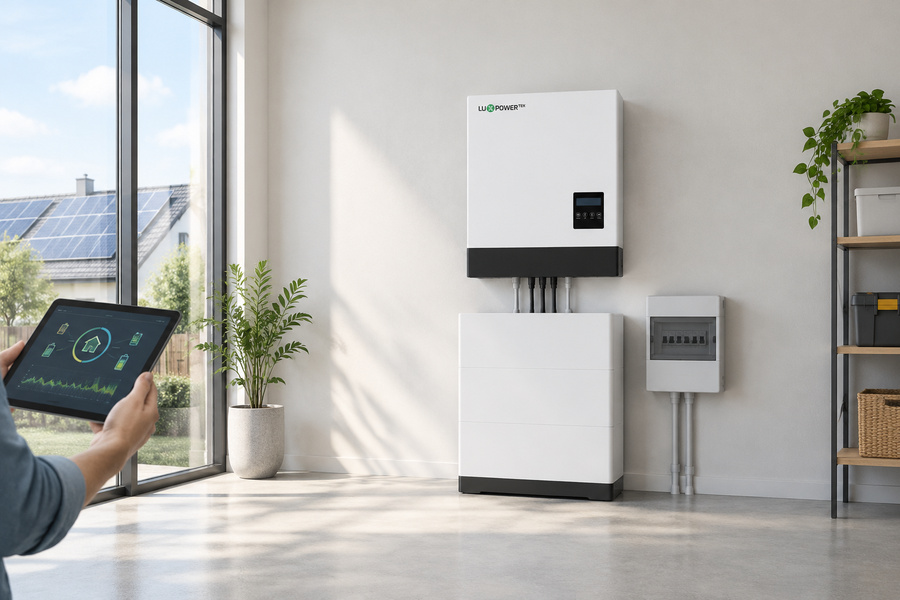
A hybrid inverter is a strong starting point when solar generation, battery storage and the utility connection must work together throughout the day. The system can direct solar energy to household demand, store surplus production and use the grid when available solar or stored energy cannot meet the load.
Time-of-use control adds another reason to choose this category. Supported charging schedules allow energy use to follow the household’s tariff and backup priorities. The LXP 3–6K hybrid inverter, for example, combines time-of-use charging with on/off-grid switching. Actual bill reduction depends on the tariff, generation and consumption pattern; the inverter label cannot establish a savings figure.
Backup still requires a suitable system design. Connected backup circuits, available battery energy and inverter output determine what remains powered during an outage. A hybrid installation does not automatically supply every appliance in the building. For projects that require electricity export, our recommendation is to confirm the selected model and local grid requirements before making export part of the energy plan.
Eco-Hybrid Inverters: Off-Grid Operation with Added Flexibility
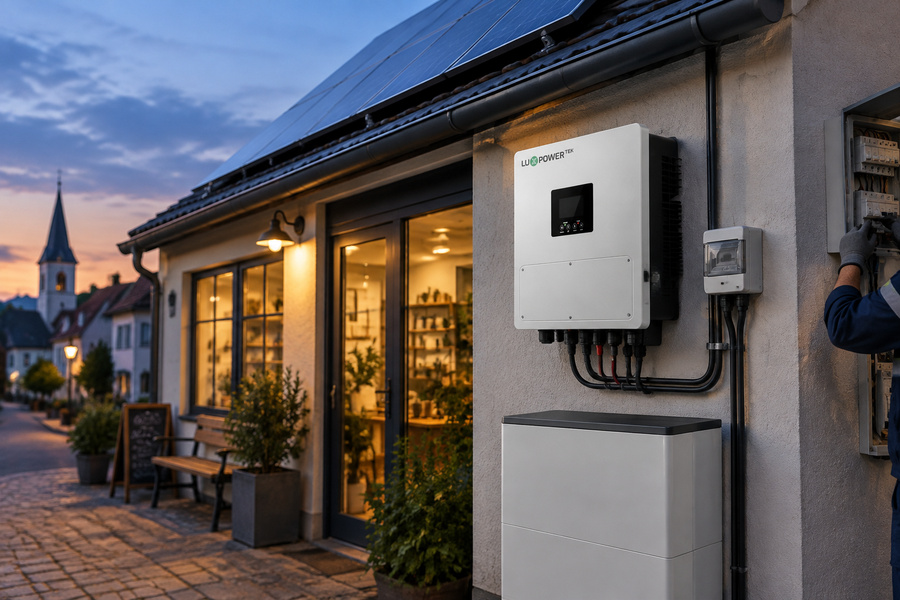
Eco-Hybrid is our own product category. It is built on an off-grid inverter platform with selected hybrid functions, giving off-grid and backup systems more flexibility when utility power is available. The system can operate independently while also supporting solar and AC power together in approved configurations.
When hybrid mode is enabled, solar and AC power can supply household loads at the same time. If solar production falls below demand, utility power can help cover the difference and reduce battery discharge. The Eco-Hybrid SNA range also supports self-consumption and charge-priority modes, allowing the system to prioritize immediate load support or battery charging.
The SNA PRO-EU 3–6.5K is designed for backup and self-consumption applications, including zero-export configurations. An external current transformer, or CT, measures grid power flow and supports related control functions. Correct CT installation and configuration are essential for accurate operation.
Hybrid operation and grid export require separate checks. SNA PRO-EU hybrid functions depend on the selected configuration, market and local grid requirements. Where grid-connection rules do not permit the hybrid mode, the inverter must remain in an appropriate off-grid or backup configuration. A zero-export setting can control power flow, but it does not replace local approval for grid connection or electricity export.
What Changes When Solar Output Falls?
When solar production drops below household demand, the inverter supplements the load with battery power and, when available and properly configured, AC power from the utility. On a supported Eco-Hybrid setup, solar and utility power can work together, reducing the need to draw the full shortfall from the battery.
After sunset, the system follows its charging, discharging and battery-reserve settings. If the grid fails, power is supplied only to the circuits connected to the backup output, using the available PV and battery energy. The actual backup duration depends on the connected load, battery state and remaining energy.
LuxCloud allows users and installers to review solar, battery, grid and load data after commissioning. The SNA PRO-EU also supports selected remote configuration functions. If the battery reaches its reserve earlier than expected, review the operating schedule, load profile and energy-flow settings before changing the inverter category.
Choose Around the Loads and Grid Conditions
For a remote property, begin with an off-grid design and calculate the storage and generation needed to sustain essential demand. An Eco-Hybrid model can fit this design when its additional operating modes or AC support are useful.
For a grid-connected home seeking coordinated storage, backup and permitted export, begin with the hybrid range. Where the priority is backup and self-consumption with flexible utility assistance, consider Eco-Hybrid after checking the permitted operating configuration. Our selection approach follows the site’s energy requirements before narrowing the model.
- Backup loads: Identify the circuits that must remain powered and the appliances that can wait.
- Startup demand: Check pumps, compressors and other motors against both inverter and battery capabilities.
- Battery capacity: Consider usable energy, discharge capability and compatibility with the selected inverter.
- Grid interaction: Specify whether the project needs AC charging, joint solar-and-grid supply, zero export or permitted export.
- Generator use: Confirm the connection arrangement. On SNA PRO, generator, smart-load and AC-coupling functions share a configurable port and cannot operate through it simultaneously.
Questions That Affect the Final Choice
Can a hybrid inverter operate off-grid?
Yes, when the selected model supports it. GEN2-LB-EU 3–6K can operate with solar and battery storage without continuous grid availability. The system still needs sufficient generation, storage and output capacity for the connected demand.
Does Eco-Hybrid mean every model can sell electricity?
No. Eco-Hybrid describes a product category with additional operating flexibility. Export depends on the specific equipment, configuration and regional requirements. Confirm those conditions before including electricity sales in the project.
Which Type Provides Longer Backup?
Neither type automatically provides longer backup. Runtime depends on battery capacity, state of charge, solar generation and the power used by connected loads. A properly sized off-grid or hybrid system can provide reliable backup when its battery, inverter output and backup circuits match the site’s requirements.
For help selecting the right configuration, contact our sales and technical support team with your location, grid conditions, solar array, battery plans and essential loads. This information allows LuxpowerTek to recommend a suitable inverter and provide relevant product or project pricing details.