
If you already have solar panels and a battery at home, you probably know what they do. Your panels make electricity during the day, and your battery stores the extra power for later. But what if that same battery also helps support the electricity grid? That’s where a Virtual Power Plant (VPP) comes into play. But beginners might ask: How to prepare your solar battery system for VPP? If you are joining a VPP for the very first time, this might feel like a technical process. But there is no need to worry! In this guide, I will discuss step by step how you can prepare your solar batteries to join a VPP. So let’s get started.
What Is a Virtual Power Plant (VPP)?
A Virtual Power Plant (VPP) is a special system that connects many small energy systems and manages them together. This system mainly includes home solar panels, batteries, and other energy devices. Now, instead of working separately, they act like one larger power source. This can supply or manage electricity when the grid needs it.
Suppose hundreds of houses have solar panels and batteries. These panels and batteries work for individual homes. Right? One home doesn’t have enough stored energy to supply the grid. But what if hundreds of such homes are connected? Definitely, the batteries add up to a much larger amount of energy. That’s what a VPP does.
A VPP uses software to track these systems. It sends instructions when batteries need to charge or discharge. The homeowners still have their own systems, but they also work together as part of the VPP. When energy demand is high, the VPP asks batteries to send some stored power to the grid. However, when plenty of electricity is available, it does the opposite and charges the batteries. In return, homeowners get credit, payments, or other benefits.
How Does a Solar Battery System Work With a VPP?

In a solar system, several parts work together. Solar panels are reliable energy solutions that produce electrical energy during the day when there is sunlight. There is an inverter that converts DC into AC for your home appliances. Some of the solar energy is used in your home; however, the extra energy goes into batteries.
These batteries store the energy and use it when there is no sunshine. When you connect that system to a VPP, things work a little differently. Now, your battery still stores power for your home, but it also responds to signals from the VPP. For this, the VPP uses software to monitor connected batteries and manage them based on grid needs.
Suppose your solar panels produce electricity during the day. Your home uses some of it, and the extra power goes into the battery. In case electricity demand is high, the VPP sends a signal and asks your battery to discharge some stored energy. When enough electricity is available, the VPP allows or asks the battery to charge.
How to Prepare Your Solar Battery System for VPP? Step-by-Step Guide
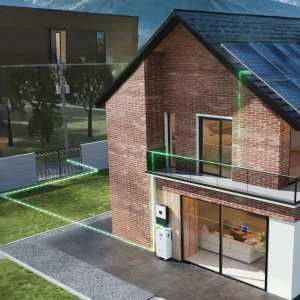
Now you have basic know-how about the VPP system and how batteries work with it. At first, it seems difficult to prepare your solar batteries for VPP. But in reality, you only need to confirm a few things, and then you can connect your batteries to VPP successfully. To make things easier, here is a step-by-step guide on how to do it.
Step 1: Check Battery & Inverter Compatibility
Before doing anything else, check whether your battery and inverter can work with the VPP you want to join. You can’t connect every battery and inverter to every VPP. No matter how well your solar system works at home, that doesn’t mean it is ready for VPP use. The battery shares information with the VPP and responds to its signals.
At the same time, a hybrid inverter helps manage the electricity moving between your solar panels, battery, home, and the grid. That’s why they both should be compatible with the VPP. So check the exact model of your battery and inverter. Then, check the VPP provider’s requirements, or ask whether they support your equipment.
Step 2: Update Software & Firmware
Now that you’re sure your battery and inverter are compatible, next comes checking the software they are running. Basically, your solar battery and inverter have built-in software that tells them what to do. From time to time, the manufacturers release updates to fix issues, improve performance, or make the battery work with new systems.
In this step, check whether your battery, inverter, and other connected devices have the required updates. This is crucial because the VPP needs to communicate with your inverter and solar system. If the software is too old, your system will struggle to receive or follow the VPP’s instructions.
However, you don’t need to worry about the technical side of these updates. Just check the manufacturer’s instructions or ask your installer whether an update is needed. If an update is available, just install it before connecting your system to the VPP.
Step 3: Set Battery SOC & Reserve
Now it is time to look at your battery’s SOC (State of Charge). SOC tells you how much energy is left in the battery. For example, if your battery shows 80% SOC, it means the battery is about 80% charged. This number changes as your battery charges and sends power to your home or the grid. The next thing is to set a reserve.
Reserve is basically the amount of energy you can keep for your own use. Suppose you want to keep a 20% reserve on a 10 kWh battery. Now, about 2 kWh will be kept aside instead of being used by the VPP; this is the reserve. The reserve will help if you want to keep some power available for your home, especially during a power outage.
The exact reserve and battery settings depend on your battery model, your energy needs, and the VPP program’s rules. Some VPPs have their own requirements for the amount of energy you can reserve. So don’t choose a reserve setting just because it works for someone else. Check the VPP requirements and your battery manufacturer’s instructions. Then, set the reserve that makes sense for your energy needs.
Step 4: Connect Communication System & Internet
Once you have set reserve and SOC, the next part is to connect to the internet. Actually, your battery also needs a way to talk to the VPP. The VPP needs to receive information from your system, such as the battery’s charge level and current status. It also needs to send instructions back to your battery.
For this, you need proper communication and an internet connection. In many systems, this connection works through your home internet or communication equipment. Use whatever system is allowed to connect to your battery. Once connected, the system can send information to the VPP and receive signals when the battery needs to charge or discharge.
Step 5: Test VPP Operation & Battery Performance
Now that everything is connected, don’t assume your solar batteries are ready for VPP. The final process is to make sure that it works. For this, check whether the VPP sees your battery and receives its information. Also check whether your battery responds in the right way when the VPP sends a command. For example, the system needs to charge or discharge the battery at a certain time.
In that case, make sure that the battery follows the command and stays within its normal safety limits. Monitor the system during the first few VPP events, too. Check the battery’s SOC, inverter status, connection, and any warning messages. If something doesn’t look right, don’t keep changing settings on your own. Contact your installer, battery manufacturer, or VPP provider and ask them to check the system.
Few Things to Consider Before You Join a VPP
When you plan to connect your solar batteries to a VPP, don’t focus only on the benefits. Your battery will be connected to another energy management system. So you should know what that means for your equipment, backup power, internet connection, and agreement. So before you do this, here are a few things you must keep in mind.
- Battery Warranty: Your battery has a limited warranty. It usually covers things like battery performance and expected life under certain conditions. When you join a VPP, the battery charges and discharges more often than it does for your home. That does not mean your battery warranty will be affected. However, check the warranty terms before joining. If you are not sure what the warranty allows, ask the battery manufacturer.
- Backup Power Needs: We bought a battery to use electricity during a power outage. It means you want to keep power for your home during a blackout. So make sure the VPP program allows you to keep enough energy in the battery.
- Loss of Some Control: When you join a VPP, that means you give the VPP some control over your battery. That does not mean you lose complete control of the system. You can still use your battery and choose certain settings. But sometimes the VPP decides when the battery should charge or discharge. Before joining, make sure you understand what the VPP controls and what decisions are still yours.
- Internet Dependence: Your battery itself does not need the internet to store energy. However, the VPP needs a way to communicate with your battery system. For this, an internet connection is what carries information between your battery system and the VPP platform. If the connection drops, the VPP will not be able to send commands or receive the battery information. So make sure you always have a stable internet connection.
- VPP Contract Terms: Lastly, before you click “agree” and join a VPP, take a little time to read the VPP agreement. Check what you are agreeing to. Read things like how long you have to stay in the program. Also find out how your battery can be controlled, how payments are calculated, and what happens if you want to leave. Also look for any fees, battery requirements, data-sharing rules, or other conditions. If anything is unclear, ask the VPP provider before signing up.
Conclusion
In short, a solar battery mainly stores extra energy from your solar panels. With VPP, your battery becomes part of a larger network where many home batteries work together. However, getting your solar battery ready for VPP might feel technical. That’s why, in this guide, I have discussed the entire process step by step. First, check that your battery and inverter are compatible. Then, update the software, set the battery reserve, connect the internet, and test everything. But before joining, I recommend checking the battery warranty, backup power needs, and the VPP agreement. Once you know the rules and your system is ready, you can join the VPP with confidence.