
Germany is moving steadily toward clean and renewable energy. Besides, the grid bills are getting higher and higher than in previous years. As a result, more homeowners are installing solar panels to reduce electricity bills. They gradually want to depend less on the utility grid. Many people in Germany often ask about the average household solar panel cost and whether they should go with a hybrid inverter.
By 2025, Germany had already passed five million solar installations. Most of these setups are installed on rooftops in residential areas. Solar energy is also becoming more attractive because of lower equipment prices and tax benefits in Germany.
How Much Electricity Does an Average Household Need?
In Germany, electricity demand for each house may be different. Some houses may need basic daily electrical appliances. On the other hand, some houses may need an advanced setup like EV charging. So, the electricity consumption varies a lot by house size and the number of residents.
For example, we will consider an average two-bedroom household in this discussion. It is suitable for a small family of two or four people. The house has common appliances such as 2 ACs, 1 large fridge, 2 electric stoves, 1 television, computers, security cameras, and so on.
The actual electricity use here typically depends on how long each appliance works. It also changes between summer and winter. Air conditioners, cooking appliances, water pumps, and EV charging are usually the largest loads.
| Appliance | Quantity | Typical Power | Estimated Use | Consumption |
| Air Conditioner | 2 | 1.2kW each | 4 hours | 9.6kWh |
| Fridge | 1 | 150-250W | Automatic | 1.5kWh |
| Stoves | 2 | 1.5-2.0kW | 1.5 hours | 4.5kWh |
| Television | 1 | 100-150W | 4hours | 0.5kWh |
| Computers | 2 | 100-250W | 6hours | 2.0kWh |
| Cameras | Several | 40-80W | 24hours | 1.5kWh |
| Washing Machine | 1 | 2.5-2.0kW | One Cycle | 1.0kWh |
| Dishwasher | 1 | 1.2-1.8kW | One Cycle | 1.2kWh |
| EV charging | 1 | 7-11kW | Depends | 6-12kWh |
Except for the appliances mentioned above, there are other appliances like water pumps, lighting, and other small devices. So, you can consider another 2kWh extra consumption in each house.
When you are setting up a solar system for your house, you might not need all the items mentioned in the table. You might only need some emergency devices, like a fridge, computers, and cameras. For normal household use, you might need a 12-16kWh solar setup. On the other hand, if you add the air conditioner, you might need to consider 20-26kWh solar systems. Finally, if you want to add EV charging, you should consider a 27-38 kWh solar system.
Recommended Solar-System Size
For a 2-bedroom household, if you don’t need EV charging, an 8- 10 kWh system will suffice. You can use general-purpose model solar panels of 430-460 W, 18-24 pcs.
For a household that regularly uses AC and charges an EV, you will need to add 2-5kWh more. This would require approximately 27-35 panels.
How Much Does a Solar Panel System Cost in Germany?
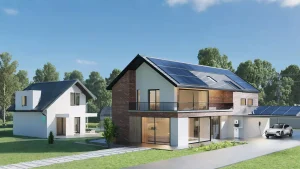
Solar panel cost heavily depends on multiple critical factors. The first thing that comes is the solar panel size. Then, the price will depend on your goals and the type of hardware you are using. Other costs include installation charges, grid connection setup, and local permits.
However, the German government does not charge any VAT on renewable energy setups. Thus, it lowers the total upfront cost in the end.
In 2026, a small 5 kWp system needs around €7,000 to €9,000. A medium setup like 10 kWp requires around €13,000 to €16,000 to complete. A 15 to 30 kWp large system costs start from €20,000. However, 10 kWh of battery storage adds about €7,000 to €9,000 more. Solar panel costs also depend on storage needs.
What Determines the Final Price of a Solar System?
As already mentioned, the solar system cost in Germany depends on several factors. Your investment is influenced not only by system size, but also by equipment quality. It also depends on how you install it, and on other components involved. Therefore, it is crucial to understand all these factors before you invest.
Solar Panel Capacity
German houses need different solar panel system sizes. If the house is small and requires few components to run, an 8-10 kWp system is an ideal option. On the other hand, larger homes need 10 kWp or more. Overall, the capacity relies on the roof size and energy needs. Higher energy needs mean a higher upfront cost, which eventually balances later.
Solar Panel Quality
Solar panel quality affects both price and performance. Premium quality requires higher upfront costs. But budget panels are cheaper and produce less energy. Besides, when you choose quality panels, they last approximately 25-30 years. Choosing a good-quality panel means long-term returns as well.
Roof Condition and Design
In Germany, most houses have the triangular rooftop, which is very suitable for installing solar panels. Most houses here are designed to get access to the sunlight as much as possible. If you consider a house facing a north-south direction, it gets access to the most sunlight. These roofs are ideal for solar charging during the day or peak hours.
Inverter Type
An inverter typically converts the solar energy into usable current. There are various types of inverters. Some offer simple charging and discharging, while some offer advanced features. Simple inverters typically cost less but are not reliable. On the other hand, hybrid inverters offer various types of functions and are highly reliable as well.
Battery Storage Capacity
Solar panel costs in Germany also depend on the battery storage system you use. As mentioned earlier, a 10 kWh battery costs about €7,000 to €9,000. Using such a storage device can increase the consumption rate from 30% to 70%. Larger batteries may cost more but store a lot of energy simultaneously. More storage also means less dependency on the grid.
Electrical Upgrades/Future Expansion
Older homes and electrical systems do not meet the needs of solar panels. Outdated wiring may not handle the system properly. Therefore, the system needs electrical upgrades. These upgrades ensure safety and performance, but they add costs. Skipping it may leave risks later.
Is a Hybrid Inverter Worth It?
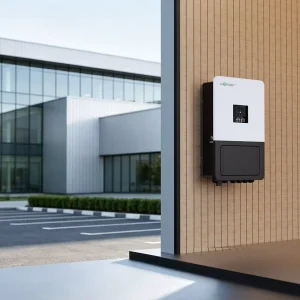
Hybrid inverters cost more than standard inverters. But they also offer numerous advantages to solar owners. They combine solar conversion with smart battery management. By summarizing the basic functions of inverters, hybrid inverters offer better control and better results.
Efficient Charging and Discharging
Hybrid inverters can smoothly switch between charging and discharging phases. They can also efficiently manage solar, battery, and grid-line power by automatically switching between them. Thus, they reduce losses and keep the system running continuously.
Reduce Grid Electricity Use
In general, a hybrid inverter always prioritizes solar energy and battery power initially. This reduces grid electricity use and significantly minimizes the electricity bill. Thus, savings increase, and self-consumption rises.
Supports Battery Storage Directly
Smart battery systems are integrated into hybrid inverters. They are directly connected to the battery system. There is no need for an extra converter between the inverter and the panel. This simplifies setup costs and improves efficiency.
Enables Backup Power
During a sudden grid outage, a hybrid inverter can provide power backup. It keeps essential devices running. This way, hybrid inverters can provide security during grid failure.
Works Better with EV Charges
Hybrid inverters intelligently route solar energy directly to your electric vehicle charger. As a result, you can power up your Ev’s from your self-generated electricity instead of using grid energy.
Allows Net Metering and Increase
Hybrid inverters support net metering and increase setups as well. When you generate excess power, it can feed back to the public grid. Such smart energy management maximizes financial returns and optimizes your daily power sales.
Allows Future Expansion
Hybrid inverters also support future expansions. You can set up inverters today and add a battery setup later when needed. This flexible setup protects your initial investment and allows seamless integration later.
Real-Time Monitoring
Hybrid inverters support real-time data monitoring through digital software. You can track energy production and consumption daily and quickly identify problems. This data makes solar systems easier to control.
LuxpowerTek Hybrid Inverters for Solar System
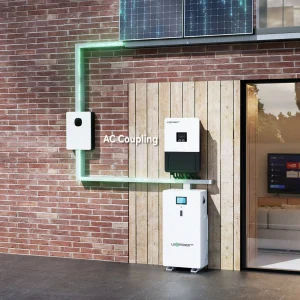
LuxpowerTek is a leading manufacturer of various types of inverter solutions and solar batteries. Among its hybrid inverters, the LXP-LB-EU 12K is the most suitable for an average household.
LXP-LB-EU 12k is a hybrid single-phase solar inverter supporting 12kW capacity. This system contains 3 MPPTs that can handle up to 18 kW of PV input. It can also smoothly switch between off-grid and on-grid systems automatically. During any power cuts, LXP-LB-EU can easily deliver 12kW UPS output. Up to 10 units can work in parallel for larger systems.
The inverters support battery storage and work with AC coupling or generators. This system includes Tigo optimizers that can smoothly harvest power in shaded or changing weather conditions. With the monitoring interface, you can remove or add battery backups accordingly. Its real-time monitoring also gives remote control, data, and performance insights.
Conclusion
Investing in a solar panel system in Germany is a beneficial choice for both homes and businesses. It gives long-term financial benefits. Rising grid electricity prices make self-generated power a smart investment. In this case, hybrid inverters would be one of the top-tier choices for you. They store energy through batteries and maximize your energy independence at the same time. In addition, German government incentives help lower the initial setup cost.
So, what’s stopping you from grabbing such an opportunity? Power your home with solar energy today with our best hybrid inverters. For further help, feel free to contact us. Our expert will guide you through every step. Take control of your power and start saving Today.