

Today, electricity has become a necessity in life. It is no exaggeration to say that if there is a power outage worldwide, it may paralyze our lives. In order to keep equipment running without interruption even after a power outage, scientists have invented power systems.
UPS and inverters are two of the solutions. Despite the similarity of the role of ups and inverters, people are still confused about the difference between a UPS and an inverter. This article will focus on the differences between ups and inverters so that you can use them better once you understand their functions.
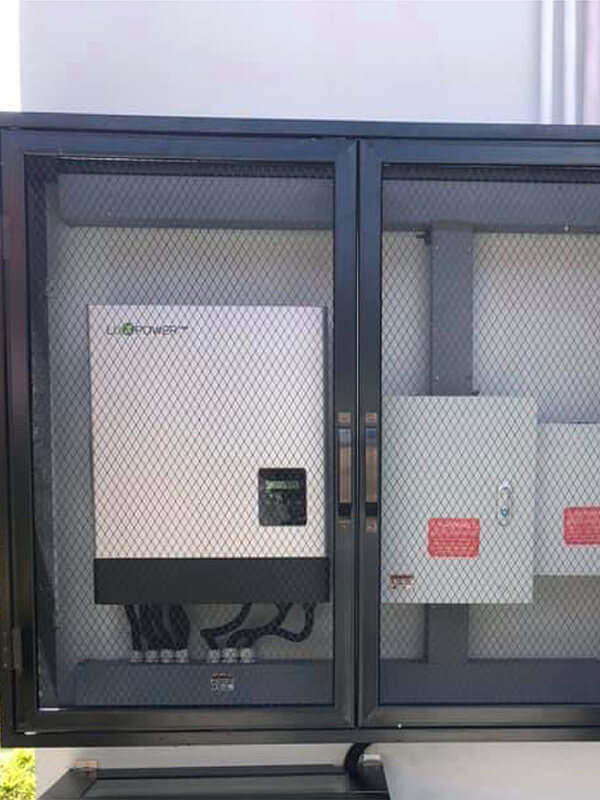
What Is an Inverter?
An inverter is a power electronic device that converts direct current (DC) into alternating current (AC) at the voltage and frequency your appliances expect, typically 230 V / 50 Hz or 120 V / 60 Hz. The DC power can come from a battery bank, a solar array, or a DC bus. Every other function an inverter offers is built around that core conversion.
For solar and backup systems, an inverter is usually part of a wider energy system. A battery inverter or inverter-charger can convert battery DC power into AC power for household loads, and it can also recharge the battery when grid power, solar power, or a generator is available.
Three inverter families cover most backup and solar storage scenarios:
- Off-grid inverter: runs from batteries and solar without a grid connection. See LuxpowerTek off-grid inverter options for standalone and weak-grid applications.
- Grid-tie inverter: feeds solar power into the utility grid. By itself, it normally shuts down during a grid outage for safety reasons.
- Hybrid inverter: combines solar input, battery charging, grid interaction, and backup output in one system. This is the common choice for homes that want solar self-use and backup power. See LuxpowerTek hybrid inverter solutions.
Output waveform is also important. A pure sine wave output is the safer default for refrigerators, air conditioners, pumps, routers, computers, and other sensitive loads. Modified wave output may cost less, but it can create extra heat, noise, or unstable operation for motor-based and electronic equipment.
What Is a UPS?
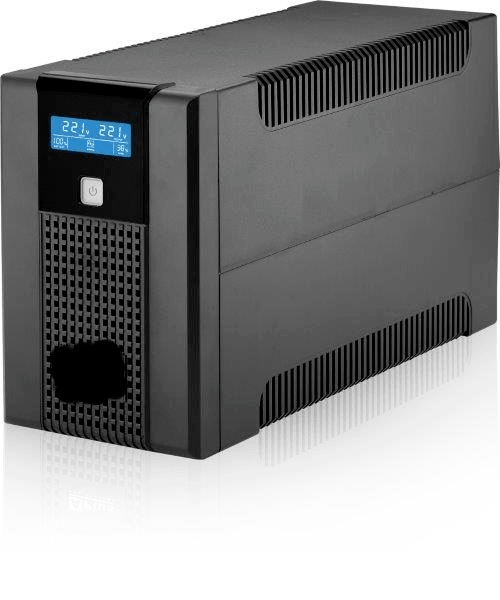
A UPS, or Uninterruptible Power Supply, is a complete backup device designed so that connected equipment notices little or no interruption when utility power fails. It normally includes a charger, battery, inverter stage, and transfer circuit inside one unit.
A UPS is built mainly for ride-through and power quality, not long-duration whole-home backup. Runtime is usually measured in minutes: enough to save work, shut down a computer safely, keep network equipment online, or bridge the gap before another backup source starts.
UPS systems are commonly divided into three types:
- Standby UPS: the load normally runs on utility power, and the battery takes over when grid power fails.
- Line-interactive UPS: adds voltage regulation to handle sags and swells without always using the battery.
- Online UPS: continuously feeds the load through the inverter stage, giving the fastest protection for very sensitive equipment.
The practical difference is simple: a UPS is better for protecting sensitive electronics from very short interruptions, while an inverter-based battery system is better for longer backup time and larger household or project loads. If the project involves solar storage, battery capacity, and longer outage support, review LuxpowerTek battery storage options together with the inverter selection.
Different between UPS and inverter
| Feature | UPS | Inverter |
|---|---|---|
| Definition | UPS stands for Uninterruptible Power Supply | An inverter is a power electronic device that converts DC power to AC power. |
| Function | Immediate power support for gadgets in case of power failure | Converts stored DC power from a battery into AC power for appliances; inverter-chargers can also recharge batteries from grid, solar, or generator input. |
| Switch over | 3 to 8 milliseconds | 500 milliseconds |
| Backup | Electricity | Electronic power |
| Back up Time | Power Back up for Short Duration | Power Back up for Long Duration |
| Types | (a) Offline、 (b) Online、 (c) Line interrupting or Standby UPS. | (a)Stand Alone (b) Grid Tie Inverter |
| Connection | Directly connected to the appliances. | Connects to solar panels, batteries, and appliances. |
| Cost | More Expensive | Less Expensive |
| Main Part | Rectifier/charger, Inverter ,controller | Inverter and Battery |
| Supplying Power | Short Duration | Long Duration |
| Energy Consumption | More due to constant battery Charging | Less |
| Battery Maintenance | Do not require any maintenance. | Requires regular maintenance |
UPS:
- UPS means Uninterruptible Power Supply.
- If computers, huge equipment, or medical instruments are not turned off, we may lose data. An uninterruptible power supply (UPS) provides devices with continuous power. This means that the transition from mains power to battery power is quite quick.
- A UPS is a complex system with numerous components. The batteries, charge controller, any transfer switches required to switch between the primary and backup batteries, and inverter circuits are all included in the UPS. Because the UPS stores DC power, it is also an inverter. To match the appliances linked to the main power line, we must convert them to AC power.
- UPS = Inverter + Battery Charger
- A UPS is simply an inverter with a built-in battery charger.
- The UPS only provides backup for 10 to 20 minutes. Its primary goal is to create a tiny backup so you may save applications and data.
- The UPS also guards against surges, voltage fluctuations, Undervoltage, overvoltage, spikes, and noise on the line.
Inverter:
- The inverter transforms the DC electricity from the battery to AC and gives power.
- In typical circumstances, power is sent straight to the load. It also charges the battery while drawing power from the AC source.
- The inverter receives power from the battery and converts it to AC power to power the electrical devices during a power outage.
- The inverter serves as a backup power source for all household gadgets, lights, and fans.
- Inverter stores electrical energy in flat or tubular batteries. As a result, it requires ongoing maintenance and must be replenished with distilled water regularly.
- Inverter life span is typically 15-20 years
The main difference between UPS and inverter
1. Different directions of focus
You can use a UPS to protect your gadgets from power outages if you don’t lose power frequently. Switching to a UPS is practically fast, and UPS backup typically lasts about 30 minutes.
The inverter takes a little longer to turn on than the UPS, and power outages frequently cause electronic equipment to reboot. Because TVs don’t care about switching delays, UPS favors PCs while inverters are recommended for households.
2. Backup time
A UPS can provide around 15 minutes of equipment backup. The inverter, on the other hand, depending on its capacity, can supply several hours of backup. You can utilize inverters to power your complete home based on capacity. If your neighborhood experiences a lengthier power loss, you can use it to keep at least a few lights and fans on.
3. Maintenance and longevity
The UPS does not require any maintenance. Regular maintenance is needed for the inverter. This is because ambient air circulation, dust, and other factors might shorten the lifespan inverter. The UPS’s downside is that the batteries are constantly charged and discharged even when there is no power outage. As a result, the battery lasts 4-5 times as long as the inverter battery.
4. Price
In comparison to inverters, UPS is more expensive.
UPSs only give backup power for a limited time, whereas inverters provide electricity for a long time.
Inverters have voltage variations, whereas UPS has no voltage fluctuations because their input depends on the output power.
UPSs are utilized at home, in offices, and in industries, whereas inverters are used in offices.
Should I choose a UPS or an inverter?
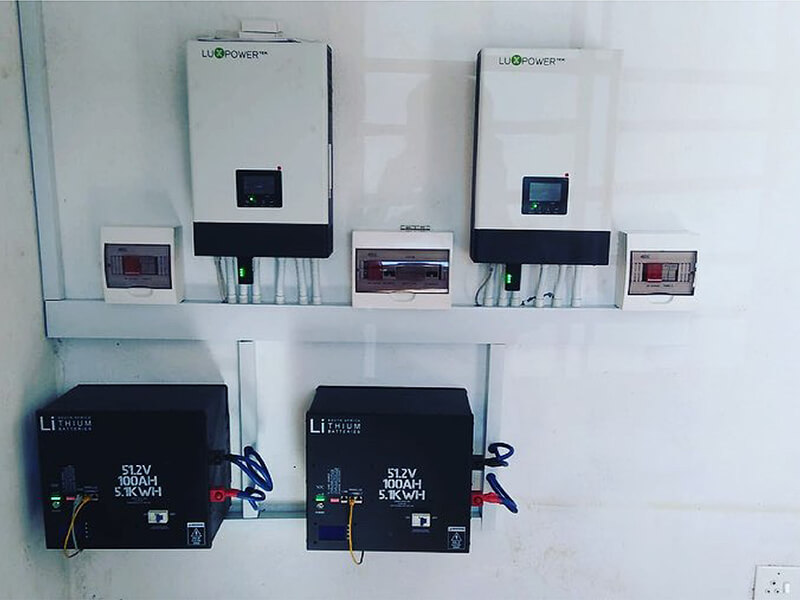
What is the difference between a UPS and an inverter? Perhaps you already know the answer after reading the preceding comparison of UPS and inverter differences. Cost, power requirements, and protection must all be considered while developing products. To put it another way, it all boils down to your backup needs and, more crucially, the lengthy power supply delay.
Which should I choose for my home/business: UPS or inverter?
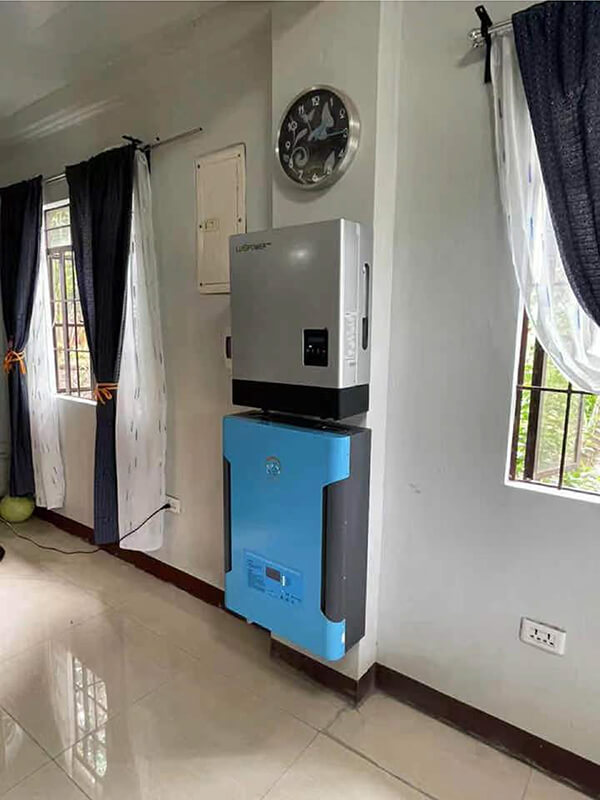
This section is for you if you have not yet deployed any of these. To maintain data security and revenues, major company and organizational applications that demand high dependability of the power system should choose the device with the least latency – the UPS. An inverter may be a more cost-effective option for household use. When used for typical household appliances, the inverter’s operation is unaffected by extended switching periods and viable.
If I already have an inverter in my house, do I need a UPS?
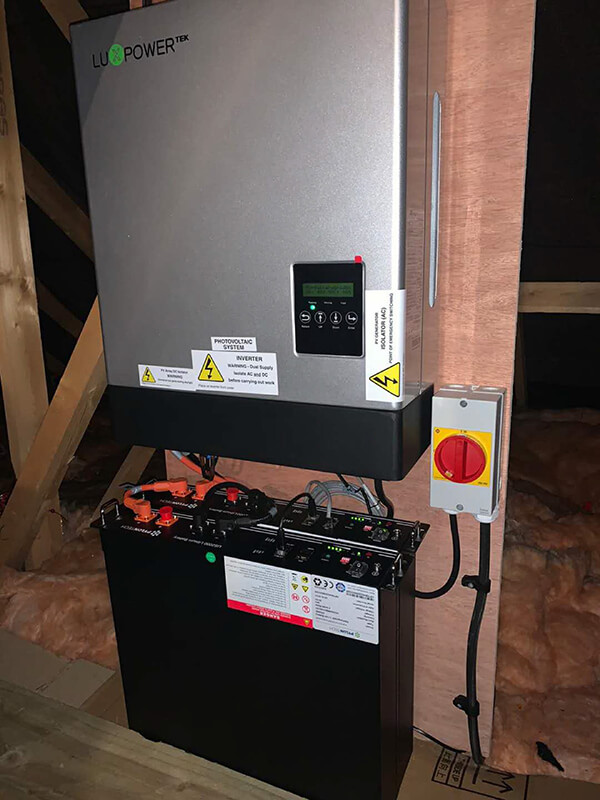
Some folks may be concerned about the inverter’s ability to cope with a PC failure and want to install a UPS. It’s OK if you don’t want to utilize the main inverter’s PC instead of connecting to a UPS.
However, some UPS units will not work with inverters (for example, a traditional UPS with an obsolete square/delta wave output converter), and sine waves can be dangerous. It is, however, quite doable if the inverter combined with the UPS is a pure sine wave inverter and the UPS is capable of processing sine waves. It is recommended that you contact your inverter supplier and get assistance from their professionals for a better experience.
Frequently Asked Questions
Can a hybrid solar inverter replace a UPS?
For most household loads, a hybrid solar inverter with a backup output can cover the role people expect from a larger backup system: keeping lights, refrigerators, routers, TVs, and common home loads powered during an outage. For equipment that cannot tolerate even a very short interruption, such as some servers, medical devices, or industrial controllers, a dedicated online UPS may still be needed. A practical setup is to use a LuxpowerTek hybrid inverter for home backup and keep a small UPS only for the most sensitive device.
How fast does the switchover need to be?
The required switchover time depends on the most sensitive load in the system. Many household appliances can tolerate a short interruption, while computers, network devices, and control equipment need faster protection. If the load must not blink at all, use a UPS. If the goal is longer backup time for household loads, use an inverter and battery system sized for the load and runtime.
Why does a grid-tied solar system stop during a blackout?
A standard grid-tied solar inverter disconnects during a blackout because it must not energize utility lines when the grid is down. Solar panels alone do not guarantee backup power. To keep selected loads running during an outage, the system needs a battery and an inverter with a dedicated backup output, such as a hybrid inverter or suitable backup inverter configuration.
Can I use a UPS together with an inverter?
Yes, but the equipment must be compatible. A UPS can usually be placed after an inverter output for a computer or router if the inverter output is stable and pure sine wave. The reverse arrangement is usually not useful because it adds conversion losses and complexity. For project-level design, confirm the inverter, UPS, battery, and load requirements before installation.
Do I need a pure sine wave inverter?
For most serious home backup and solar storage systems, yes. Pure sine wave output is recommended for refrigerators, pumps, compressors, routers, computers, medical equipment, and appliances with motors or sensitive electronics. It is the safer default for a system expected to run reliably over many years.
How do I size a UPS or inverter?
UPS capacity is often shown in VA, while inverter capacity is usually shown in watts. They are related but not identical, because watts depend on power factor. For inverter sizing, list the running wattage of the loads, add starting surge for motors or compressors, then leave a safety margin. For longer backup, also calculate battery capacity. LuxpowerTek product pages and Downloads can help you compare inverter and battery specifications before sending a project inquiry.
How do I estimate backup runtime?
A simple estimate is usable battery energy divided by continuous load. For example, a 5 kWh battery does not always deliver the full 5 kWh to loads after depth of discharge limits and inverter efficiency are considered. Runtime should be calculated from the actual battery capacity, usable energy, inverter efficiency, and the loads that must stay on during an outage.
Will a UPS or inverter increase electricity consumption?
Both have conversion losses, but their roles are different. A UPS is usually kept ready for short-duration protection. A hybrid inverter system can support longer backup and, when paired with solar and battery storage, can also help shift energy use. The right choice depends on whether the priority is zero-interruption protection, longer backup time, or solar energy management.