
Introduction
North America and some areas of the United States use different voltage systems. They operate various appliances. Not all appliances have a standard 120V supply. Some may require a 240V supply.
A split-phase solar system is a unique setup that supports both 120V and 240V. It has one neutral and two hot conductors, which offers greater flexibility. Today, we will dive deep into split-phase solar systems and how they work.
What is a Split-Phase Solar System?
A split-phase solar system differs from other types. It supplies two different AC voltages— 120V and 240V. This system is widely used across North America.
Compared to single-phase, it has two hot conductors and one neutral conductor. The power arrangements include:
- L1: The first 120V hot leg.
- L2: The second 120V hot leg.
- Neutral: The center connection that provides a return path for 120V loads.
- Ground: The safety conductor that provides a fault-current path.
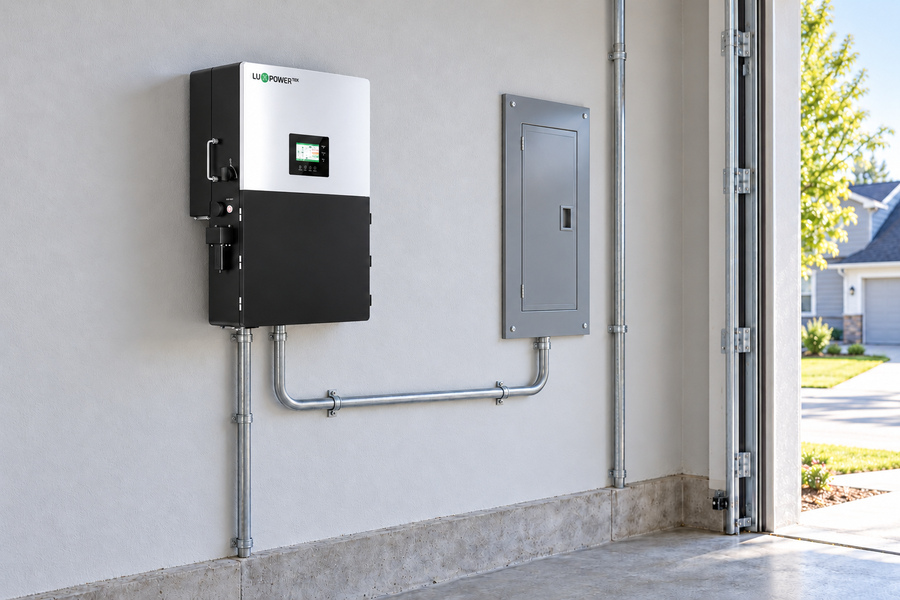
How Does a 120V/240V Split-Phase System Work?
Understanding split-phase systems is essential for higher performance. It uses two hot conductors and one neutral conductor and operates as follows.
Two Hot Conductors
Two hot conductors, such as L1 and L2, carry the load. Both hot conductors provide opposite voltage waveforms, supporting a 240 V supply.
L1 reaches a positive-polarity peak, while L2 reaches a negative-polarity peak.
Neutral Connection
Neutral connection is often the central connection. It provides a return voltage for 120 V electrical loads. This neutral conductor is essential for voltage to pass through.
240V Between L1 and L2
Larger appliances don’t need a separate system. The two hot legs have opposite waveforms and produce a 240 V voltage difference. It is essential for support.
Load Distribution
Electrical loads are distributed between L1 and L2. For example, kitchen and lighting outlets. They both operate on different legs. At the same time, an electric range may operate on a single leg.
A properly designed inverter must manage this load distribution. It must provide the required power support.
Why Does North America Use Split-Phase Power?
The 120V/240V arrangement is typical in North America. Some parts of the United States also use this voltage. Do you know why? It is because of wide compatibility with appliances.
This voltage arrangement covers both household and commercial appliances. There are many other reasons for this split-phase power use.
Household compatibility
One key reason for this voltage is its compatibility with loads. Most household loads use 120V. It handles most residential electrical panels.
Appliance support
Sometimes, high-power equipment is used. They don’t use standard 120V. Instead, they operate at 240V. In these cases, a split-phase system is already compatible. It delivers excellent performance.
Flexible distribution
Instead of a single hot conductor, a 120/240V arrangement provides two hot legs. It offers better flexibility and load support.
Backup power
If you have multiple appliances with different voltages, it offers better support. Your appliances get backup power.
Solar integration
Hybrid inverters can combine solar generation, battery storage, and utility electricity. They make energy conversion and storage seamless.
Key Factors When Choosing a Split-Phase Solar Inverter
Choosing the right inverter matters more than comparing prices. You need to review split-phase inverters thoroughly. We have added key tips here.
Rated Output Power
Inverter capacity is the rated power an inverter system can support and provide. For example, a 10kW inverter system supports up to 10kW of AC power. However, actual support may vary depending on real-time conditions.
Based on your applications and needs, check the inverter’s rated output power. Make sure it falls within the given range.
120V and 240V Compatibility
120V and 240V are two different voltages. 120V is a standard household voltage, while 240V is the voltage for larger appliances.
Split-phase inverters help with both voltages. They allow wide compatibility. But before you choose one, confirm compatibility. Check whether the inverter supports both voltage options.
Battery Compatibility
Batteries help store power. However, incompatible batteries are useless. They won’t work with the inverter system.
Therefore, choose compatible batteries. Check the inverter’s supported batteries. Compare their charging and discharging currents. They should match the available battery power and inverter capacity.
Solar Input Capacity
Inverter capacity is crucial and determines how much power it can accept. Regarding solar input capacity, you should consider the following features:
- Maximum PV input power.
- Maximum DC voltage.
- MPPT voltage range.
- Maximum input current.
- Number of independent MPPT trackers.
- Number of supported PV strings.
Multiple MPPT trackers can help manage solar panels and optimize power production.
Backup and Transfer Capabilities
There can be emergency conditions. For example, a storm hits North American cities. In that case, you need backup power.
Your inverter system must have sufficient energy-storage capacity. Check output rating, backup power, and transfer time.
Certifications and Grid Compliance
North American authorities are strict about compliance. They require proper inspection and compliance with rules and regulations. There are a few necessary certificates, such as:
- UL 1741.
- IEEE 1547.
- CSA electrical safety requirements.
- NEC installation requirements.
- Applicable local utility interconnection rules.

LuxpowerTek Split-Phase Inverter Options for North America
Luxpowertek is a top supplier of split-phase inverters. It delivers high-quality inverter solutions. Common examples are as follows:
LXP-LB-US Series: Residential Solar and Battery Backup
The LXP-LB-US series is a one-stop inverter solution. This means you can store energy, consume it, and run your devices instantly. This Luxpowertek model has high efficiency.
It has several features, such as:
- 12kW rated backup output.
- 120/240V split-phase compatibility.
- Maximum 18kW PV input.
- Three independent MPPT inputs.
- Maximum 250A battery charging and discharging current.
- 200A continuous AC passthrough current.
- Support for up to 10 parallel units.
- Generator connection and smart load functionality.
GEN-LB-US 5-13K Series: Flexible Hybrid Solar Applications
GEN-LB-US 5-13K solar inverters have a wide range of options. They have 5K, 6K, 8K, 10K, and 13K versions. With one-stop energy supply and storage, it offers the following quality features:
- 120/240V and 120/208V output options.
- Multiple inverter capacity options from 5kW to 13kW.
- Two independent MPPT inputs.
- 48V/51.2V battery compatibility, depending on configuration.
- Solar and battery integration.
- AC-coupling support on applicable models.
- RS485, CAN, Wi-Fi, and LAN communication options.
- IP66-rated enclosure.
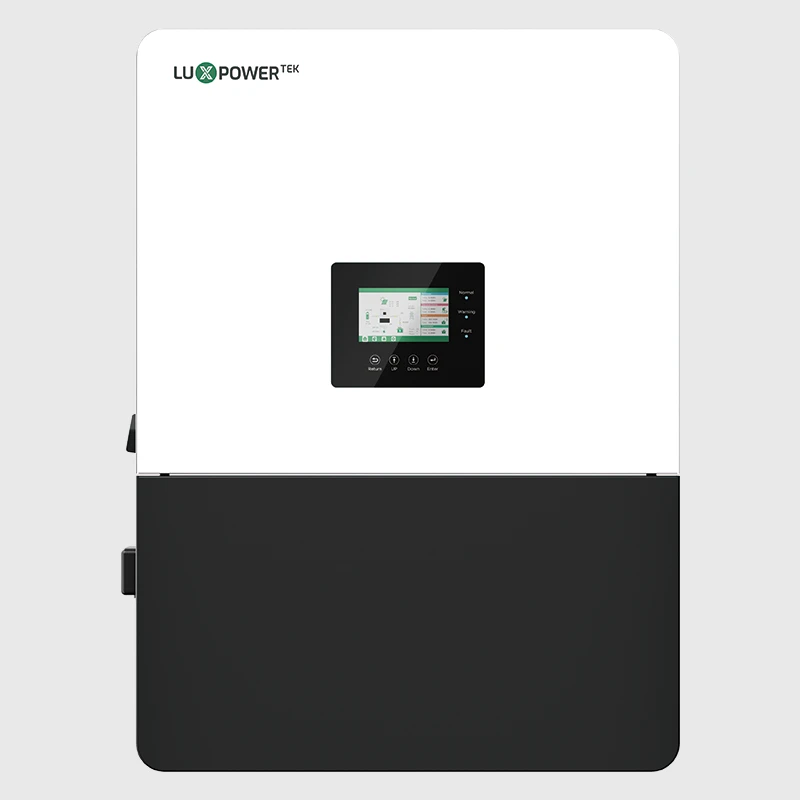
GEN-LB-US 9.6K PRO-16K Series: Higher-Capacity Residential Systems
GEN-LB-US 9.6K PRO-16K is an inverter series for residential systems. However, it is suitable for high-capacity systems.
Due to its split-phase design, it offers effective features, such as:
- 9.6kW to 16kW inverter output options.
- 120/240V split-phase and 120/208V output support.
- Up to 21kW maximum PV input power.
- Three independent MPPT trackers with five string inputs.
- 48V/51.2V battery compatibility.
- Up to 250A battery charging and discharging current.
GEN-HB-US 25K: Larger Solar and Energy Storage Projects
Do you have large-scale projects with high-power tools? GEN-HB-US 25K is a Luxpowertek split-phase inverter. It has a 25kW capacity and delivers quality power for commercial and energy storage projects.
You should consider it for:
- Large residential properties.
- Properties with significant HVAC requirements.
- Larger solar and storage systems.
- Projects requiring greater inverter capacity.
- Applications with plans for system expansion
SNA US Series: Off-Grid Split-Phase Applications
SNA US 12-15K is one of the top models for off-grid solar systems. It delivers quality power at the off-grid station. It supports 120V/240V configurations.
The features of such an inverter include:
- 12kW and 15kW model options.
- Up to 24kW PV input on the 12 kW model.
- Two MPPT trackers with four PV strings.
- Maximum 250A battery charging and discharging current.
- Support for up to 16 parallel units.
- Dedicated generator input.
- Automatic generator start and stop functions.
- Dual AC output connections.
FAQs
- Can LuxpowerTek Split-Phase Inverters Work Without the Utility Grid?
Selected LuxpowerTek split-phase inverters operate without a utility grid. The SNA US series is specially designed for off-grid operation.
- Is a Split-Phase Inverter Better Than a Single-Phase Inverter in North America?
Most North American homes use the 120V/240V electrical configuration. A split-phase inverter offers both voltage and power formats. Therefore, split-phase AC is better than single-phase.
- Do I Need a Special Battery for a Split-Phase Solar Inverter?
You need a compatible battery. It should match the inverter’s voltage, communication protocol, charging current, and discharge limits.
- Can a Split-Phase Solar Inverter Run Both 120V and 240V Appliances?
Yes. A properly designed split-phase solar inverter can run both. That makes it ideal for North American homes.
- What Is the Difference Between 120V and 240V in a Split-Phase System?
A split-phase inverter provides 120V between the hot and neutral conductors. 240V is between the two hot conductors. 120 V is a standard household voltage. 240V is often used for larger appliances.
Conclusion
In North America, split-phase solar systems are a prominent part of the energy system. They provide sustainable energy sources. However, the 120V/240V electrical arrangement is the most commonly used. Choose a high-end inverter system to support energy conversion. Feed AC power to your devices and store DC in batteries.
If you are looking for high-quality inverter systems, contact Luxpowertek. We offer several inverter systems, including the LXP-LB-US, GEN-LB-US, GEN-HB-US, and SNA US series. Each has different installation requirements and features. Contact our experts to discuss your project right away!