

Solar energy systems have become inevitable for every home. The reason is that electricity costs have gone very high. In fact, many people are shifting towards solar systems to meet their energy demands. However, there remains a question: How much does a solar energy system cost?
That’s where many seem to be confused, especially when they plan to get a solar system installed. Remember, the cost of the solar system can vary widely depending on many factors. These include the number of solar panels and batteries, the size of the inverter, and the list goes on. In this article, I will break down the cost of a solar energy system. So, let’s get started.
How Does the Solar System Work?
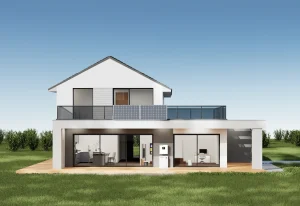
Before discussing the cost of solar panels, let’s first look at how these solar panel systems work. First things first – this system works by capturing the sunlight during the daytime. Solar panels consist of multiple photovoltaic cells. These cells play a key role in producing electricity. They produce electricity through the photovoltaic effect when sunlight falls on them.
However, the electricity is DC, which is generally not usable for domestic purposes. Why? The reason is that our home appliances generally operate on AC. For this, dedicated inverters are used that convert DC into AC. This AC is then supplied to home appliances for their safe operation.
You can also use many solar panels to produce more electricity and store it in batteries. The energy stored in the batteries can be used at night. This is crucial, as it helps reduce electricity bills and eliminates dependence on grid stations for electricity. Once installed, solar systems can produce electricity for years to come.
How Much Does a Solar System Cost?
The cost of the solar system varies depending on many factors. However, you should expect around $3 to $3.5 per watt. In other words, a small 1kW solar system will cost you around $3,000 to $3,500. Similarly, larger systems that can meet higher energy demands are costlier, i.e., over $25,000.
There are three of the most common solar systems installed in homes. These include 1 kW, 5 kW, and 10 kW. The 1kW is a basic system with less energy delivery. This is a cheaper system that only runs some fans and lights. The 5kW and 10kW solar systems are more powerful, produce more energy, and are more expensive. Here is a cost comparison:
| Solar System Size | Average Cost | Suitable For |
| 1 kW | $3,000 – $3,500 | Small loads |
| 5 kW | $15,000 – $17,500 | Medium load |
| 10 kW | $30,000 – $35,000 | Large homes (AC, heavy electricity usage) |
Honestly, there are no fixed costs when installing solar systems. The reason is that solar panel prices vary widely across countries. For example, solar panels in the USA are more expensive than in other countries, including Pakistan. Apart from panel prices, labor costs are another key factor that varies across countries.
You’ll pay higher labor costs during the solar system installation in the USA than in many Asian countries. As I said earlier, the solar system consists of multiple components. These include inverters, batteries, wiring, and the frame or structure. All these elements add to the cost of the solar system. The prices of these components can also vary across countries.
Cost Breakdown of Solar System
Three primary components contribute to the overall cost of a solar system. These are solar panels, inverters, and batteries. Solar panels are the most expensive part, accounting for up to 55% of the solar system’s cost. Second, the inverters convert DC to AC. The inverter accounts for around 20% of the overall cost.
Wiring and structure (frames) are also costlier, but their proportion is far less than that of these components. Remember, using batteries with a solar system is an option. If you use a battery, it will give you power backup, especially at night. As a result, you won’t use grid electricity at night, which will lower your bills.
It is a one-time investment that many people use when installing solar systems. But you can also get the system working without batteries. This way, you will use grid station electricity at night. Installing solar systems without batteries is also useful. How? The reason is that you won’t use grid-station electricity during the daytime. It will significantly lower your electricity bills, as you will use it only at night.
| Część | Share of Total Cost |
| Panele słoneczne | Around 55% |
| Falownik | Roughly 20% |
| Labor & Installation | Around 10% |
| Wiring & Electricals | Around 8% |
| Mounting Structure / Frame | Around 7% |
Types of Solar Systems & Their Cost
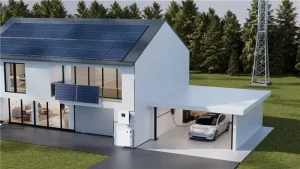
Different types of solar systems can be installed in homes. They differ in their relationship with grid stations. Those types of solar systems are as follows:
- On-Grid Solar System
- Off-Grid Solar System
- Hybrid Solar System
An on-grid solar system is one of the cheapest options installed in homes. In this system, the solar panels produce electricity. The inverter converts DC to AC, which is then used in home appliances. The excessive energy (electricity) is sent to grid stations through net metering. This excess electricity can be used anytime without paying the grid stations through bills.
This is very useful as you can use free electricity at night. Off-grid solar systems are very expensive because they require batteries. In this system, there is no concept of net metering. The solar system produces energy to meet the home’s needs. Excess energy is stored in the batteries as DC.
The energy stored in the batteries provides power backup. You can use it anytime, even when the sun is not available, such as at night or on cloudy days. A hybrid solar system is the most advanced option. Why? That’s because it uses both net metering and the energy storage system. After meeting home energy demand, the excess energy is stored in batteries.
Once the battery is charged, the electricity is then sent to the grid for later use. However, it can be expensive as it uses both net metering and batteries. Learn about the cost of these solar systems in the table below:
| Type of Solar System | Estimated Cost (USD) |
| On-Grid | $12,000 – $18,000 (5 kW) |
| Poza siecią | $20,000 – $35,000 (5 kW + batteries) |
| Hybrydowy | $18,000 – $28,000 (5 kW + batteries) |
Factors that Affect the Solar Energy System Cost
When discussing the cost of the solar system, I repeatedly emphasized its dependence on various factors. Understanding these factors helps you set the right budget for installing a solar system. In the section below, I will shed light on these factors that influence the cost of the solar system.
1- Solar System Size
First of all, the size of your solar system defines the cost you’ll pay. As I said earlier, customers generally pay $3 to $3.5 per watt for solar system installations. So, if you have a smaller solar system of 1 kW, you’ll pay around $3,000. On the other hand, for a 10 kW system, the solar system cost will be very high, around $25,000. The reason is that larger solar systems require more solar panels, bigger inverters, and more wiring and accessories. If you have a tight budget, I recommend choosing a small to medium solar system.
2- Battery Storage
Batteries are very expensive, which is a huge drawback. Many customers prefer batteries that retain excess energy for later use. If you choose batteries, your solar setup will be more expensive, and vice versa. However, energy storage is beneficial, especially if you face electricity outage issues more often in your area. The solar system will power your home and store excess energy in the batteries.
3- Inverter Type You Use
As discussed above, the solar system uses inverters that convert DC to AC. The inverters differ in their operation and efficiency. Single-phase falowniki hybrydowe are cheaper and are ideal for smaller solar systems. On the other hand, three-phase inverters are more powerful. They are suitable for large solar systems, but they are very expensive, which can be a drawback. You should carefully choose the right inverter that fits your needs without breaking your budget.
4- Labor and Installation
Installation of the solar system is not a straightforward task. It requires specialized skill and experience to get solar panels working correctly. Labor costs are another key factor influencing the cost of the solar system. Labor costs in Asian countries are low, resulting in lower solar setup costs. In countries like the USA and the UK, labor costs are very high. As a result, customers have to pay more when installing a solar system.
5- Area or Location
In some countries, there are fewer clouds, and the sun shines more brightly most of the time. In such cases, solar systems with fewer panels work fine and produce decent energy. Conversely, some countries have more clouds in the sky. In such a case, more solar panels are needed because less sunlight reaches them. More panels simply means a higher cost of the solar system. Remember, solar panel efficiency can be affected by clouds or bad weather.
Często zadawane pytania
Is the solar system worth the investment?
Yes. The solar system is a one-time investment and will keep producing free electricity for years to come. In fact, this system can cover its cost in a few years and save you from high electricity bills. Above all, you won’t have to worry about an electricity outage once you have a solar system in place.
Are there hidden solar panel costs?
Honestly no. Solar panels don’t require any regular maintenance, which could be considered a hidden cost. Once installed, these panels only require cleaning, which can be done every day with just water. There are no hidden costs with solar panels.
Should I get a solar system installed?
Yes. Installing the solar system is the best advice you’ll ever get. Why? The reason is that electricity costs are rising rapidly. Once you have a solar system, you can keep running ACs at home without worrying about bills or electricity outages. Once installed, their maintenance costs are very low, which is a significant advantage.
Wniosek
Let’s conclude: the solar system is becoming essential due to rising electricity costs. Frequent power outages can be frustrating, especially in hot regions. However, when someone decides to install a solar system, the first thing that comes to mind is “Cost”. You should expect to pay around $3 per watt for solar system installation. You can find out the total cost of your solar system, depending on its size. In this article, I have discussed everything about the cost of the solar system and the factors that affect it.