

Las baterías desempeñan un papel crucial en una instalación solar. Almacenan el exceso de energía generada durante el pico de sol y proporcionan respaldo cuando la producción disminuye. La batería de LiFePO4 para energía solar es una de las opciones más comunes.
En cuanto a baterías, las de plomo-ácido, AGM y de iones de litio son las más populares. Las baterías de plomo-ácido son económicas, pero menos eficientes que las de iones de litio. Las baterías LFP son eficientes y relativamente asequibles en comparación con las baterías de alta tecnología. En esta guía, le explicaremos todo lo que necesita saber sobre las baterías solares de LiFePO4.
¿Qué es una batería solar LiFePO4?
Las baterías LFP se encuentran entre las mejores opciones. El término «LiFePO₄» significa fosfato de hierro y litio, el material del núcleo utilizado en las celdas de las baterías. Estas baterías ofrecen mayor densidad energética y mayor vida útil. Por lo tanto, son las más eficientes para el almacenamiento de energía solar.
A diferencia de las baterías tradicionales de plomo-ácido, las baterías de iones de litio son más ligeras, más seguras y requieren menos mantenimiento. Son perfectas para vehículos eléctricos, estaciones portátiles, autocaravanas o aplicaciones marinas.
-250x300.webp)
- Las baterías de iones de litio pueden ofrecer más de 3000 ciclos, lo que supone más de 10 veces la vida útil de las baterías de plomo-ácido.
- Proporciona energía con una pérdida mínima y maximiza el uso de energía solar.
- Químicamente estable, lo que reduce el riesgo de sobrecalentamiento o incendio.
- No necesitan recargas de agua ni carga de ecualización.
- Son mucho más compactas que las baterías de plomo-ácido.
- Funcionan mejor en temperaturas frías que muchas otras sustancias químicas, aunque el frío extremo aún puede reducir temporalmente la capacidad.
¿Alguna limitación?
Las baterías solares LiFePO4 son más caras que las de plomo-ácido. Sin embargo, no requieren mantenimiento regular, como recargas de agua. Además, ofrecen una mayor profundidad de descarga (DoD). Esto suele permitir aprovechar al máximo la energía almacenada en la batería. Por lo tanto, el mayor coste inicial suele amortizarse con el tiempo.
¿Cómo funciona una batería solar LiFePO4?
Una batería de LiFePO4 funciona de forma muy similar a otras baterías. Cuando se carga, almacena energía moviendo el Li+ Iones: estos iones se desplazan entre el cátodo y el ánodo. Durante la descarga, estos iones refluyen.
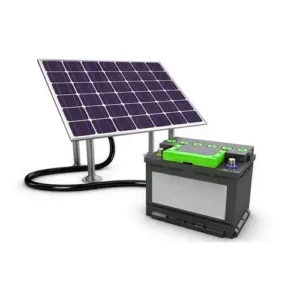
En una instalación solar, una batería de LiFePO4 actúa como depósito. Se conecta a los paneles solares mediante un inversor. Durante el día, los paneles solares generan electricidad. El inversor procesa esta electricidad y la envía a la carga de su hogar. La energía restante se almacena en una batería.
Cuando hay poca luz solar o es de noche, la batería libera la energía almacenada para alimentar su hogar o sus dispositivos. Esto mantiene su hogar con suministro eléctrico confiable, de día y de noche.
Cómo elegir la mejor batería de litio para energía solar
Existen varios tipos de baterías, cada una con sus propias características. Sin conocimientos sobre baterías, podría terminar eligiendo el tipo incorrecto o una de mala calidad. Por lo tanto, seleccionar la mejor batería de LiFePO4 para energía solar es crucial.
Para tomar la mejor decisión, es fundamental comprender varios factores clave que afectan directamente la vida útil de la batería LiFePO4. Elegir la mejor batería también garantiza la compatibilidad general del sistema.
-250x300.webp)
Calcula tus necesidades energéticas
Antes de seleccionar una batería de litio, debe calcular su consumo energético diario. Enumere todos los electrodomésticos y su consumo. Puede encontrar la carga en la parte posterior de cada dispositivo. Luego, multiplique la potencia por las horas de uso diario para obtener la demanda total de energía. De esta manera, podrá determinar la capacidad de batería requerida en kilovatios-hora.
Hay muchas razones para elegir el tamaño correcto de batería. Sin embargo, lo más importante es evitar un rendimiento inferior. Esto también ayuda a reducir los costos generales de instalación.
Una batería de tamaño insuficiente puede provocar descargas profundas frecuentes, lo que puede acortar su vida útil. Por otro lado, una batería de tamaño excesivo aumenta el coste de instalación. Por lo tanto, se recomienda calcular el tamaño total de su batería solar de LiFePO4.

Sistema de gestión de baterías (BMS)
Un sistema de gestión de baterías es fundamental para cualquier batería de LiFePO4 para energía solar. El BMS suele monitorizar el voltaje, la corriente, la temperatura y el estado de carga. Protege principalmente la batería contra sobrecargas, descargas profundas y sobrecalentamiento.
Los inversores híbridos vienen con BMS incorporado, que puede ayudarlo a monitorear el rendimiento de la batería.
Calidad y tipo de célula
La calidad de las celdas afecta directamente el rendimiento de una batería LiFePO4. Las celdas de grado A suelen ofrecer la mejor consistencia y mayor capacidad. Sin embargo, las celdas de baja calidad pueden causar desequilibrios y fallos prematuros.
Además, existen diferentes formatos de celdas, como las prismáticas y cilíndricas. Las celdas prismáticas se utilizan comúnmente en las baterías de LiFePO4 para sistemas solares. Ofrecen mayor densidad energética y una integración más sencilla.
Ciclo de vida y profundidad de descarga (DoD)
La vida útil se refiere generalmente a cuántas veces se pueden cargar las baterías antes de que dejen de ofrecer un rendimiento óptimo. Una vida útil más larga implica un mayor tiempo de servicio.
Por otro lado, la profundidad de descarga (DoD) indica cuánta energía se puede extraer de la batería de forma segura. La mayoría de las baterías de litio ofrecen una DoD de 80% a 90%.
Voltaje y compatibilidad
Al instalar una batería de litio en un sistema solar, también debe considerar su voltaje. Los voltajes más comunes para estas baterías son 12 V, 24 V y 48 V. Las baterías de menor voltaje, como las de 12 V o 24 V, requieren más unidades para satisfacer la misma carga energética. Consulte la siguiente tabla.
| Carga del sistema | 12V | 24V | 48V |
| 10 kW | 20-25 unidades | 10-12 unidades | 5-6 unidades |
| 5 kW | 10-12 unidades | 5-6 unidades | 3 unidades |
| 2 kW | 4-5 unidades | 2-3 unidades | 1 unidad |
Tenga en cuenta que la cantidad de unidades necesarias también depende de la capacidad de la batería (Ah). Una mayor capacidad puede reducir la cantidad de unidades necesarias para la misma carga del sistema. La mayoría de las baterías solares LiFePO4 de 12 V ofrecen una capacidad de 100 Ah. Por otro lado, las de 48 V pueden ofrecer entre 100 y 300 Ah.
¿Cuánto cuesta una batería LiFePO4 para energía solar?
El costo de una batería de iones de litio para energía solar puede variar entre $ 400 y $ 800+. Varios factores influyen en esta limitación de costo. En primer lugar, la capacidad y el voltaje de la batería influyen directamente en el número de unidades y, en última instancia, en el costo total. Además, el BMS, las certificaciones y la garantía pueden afectar el precio.
¿Listo para utilizar energía solar?
¿Está listo para reducir sus facturas de energía y lograr una verdadera independencia energética? Conseguir su evaluación gratuita del sistema desde LuxPowerTek ¡hoy!