

En un sistema solar fotovoltaico, el inversor es el sistema nervioso central que controla todo el suministro. Convierte la CC generada por las células fotovoltaicas en CA utilizable.
Además, si desea recuperar la CC, los inversores solares también pueden hacerlo. Sin embargo, los inversores de baja capacidad no satisfacen la demanda. A su vez, los de alta capacidad generan mayores gastos.
Aquí es donde entran en juego opciones más fiables, como el sobredimensionamiento de inversores. Hoy comprenderemos el sobredimensionamiento de inversores, sus beneficios y aplicaciones prácticas. ¡Conózcanlo!
¿Qué es un sobredimensionamiento del inversor?
El sobredimensionamiento del inversor se refiere al proceso en el que la salida de CC de los paneles solares es mayor que la salida de CA del inversor. Debido a la sobredimensión, este proceso se conoce como sobredimensionamiento del inversor, pero ayuda a optimizar el sistema.
El mecanismo de funcionamiento es sencillo.
- Los paneles solares tienen más clasificaciones de CC y brindan energía sin interrupciones.
- Dado que el inversor tiene un límite inferior y transforma solo la fuente de CC limitada en caso de energía excesiva.
- Se elimina la producción excesiva, manteniendo al mismo tiempo las pérdidas anuales limitadas. Estos casos son útiles en condiciones de poca luz, donde la generación y el aprovechamiento de energía son cruciales.
¿Por qué es posible y práctico el sobredimensionamiento del inversor?
El sobredimensionamiento del inversor es técnicamente posible y más beneficioso en diversos casos. Los paneles solares no alcanzan la potencia nominal máxima debido a ciertas limitaciones. Además, las condiciones ambientales son muy importantes en la producción de energía.
Los paneles solares rara vez alcanzan su potencia nominal máxima porque:
- Los paneles solares permanecen en el exterior. Las fluctuaciones constantes de temperatura y el aumento de la temperatura disminuyen la eficiencia del panel.
- El polvo, la sombra y la suciedad inciden constantemente en los paneles solares debido al flujo de aire. Por lo tanto, no pueden alcanzar su potencia máxima.
- La intensidad de la luz solar varía durante el día, la mañana y la noche. Suele cambiar a lo largo del día, lo que reduce la producción de energía.
- Las variaciones estacionales afectan la producción máxima, ya que el verano presenta temperaturas altas. El invierno es más fresco, pero más eficiente.
- El cable y la producción implican menos pérdidas de energía.
- El envejecimiento del panel reduce la producción con el tiempo, lo que genera una menor producción de energía incluso en las horas pico.
Beneficios del sobredimensionamiento del inversor
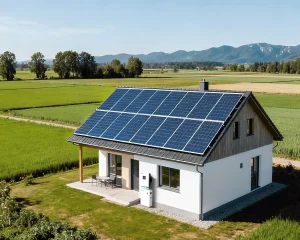
Sobredimensionar el inversor puede parecer una pérdida, pero no lo es. Obtienes más ventajas que pérdidas y disfrutas de un suministro de energía impecable.
A continuación se muestran algunos beneficios del sobredimensionamiento del inversor.
Mejor suministro de energía
El sobredimensionamiento del inversor tiene un único objetivo: producir la máxima energía posible. Pero lo consigue al menor coste posible, reduciendo los costes del inversor y aumentando el suministro de energía.
Las ganancias energéticas se obtienen al atardecer y por la mañana, con la máxima producción en la luz solar. Con una alta eficiencia solar, generará más energía.
Costos reducidos
Los paneles solares son más económicos que los inversores. Al sobredimensionar los inversores, se invierte en los paneles solares, pero se reducen los costos de los inversores.
Mantiene su comodidad en equilibrio y satisface sus necesidades energéticas durante los primeros años. Después de una década o más, disfrutará de mayores beneficios cuando la producción de energía disminuya, pero la eficiencia energética seguirá siendo óptima.
Alta eficiencia
Los inversores no producen 100% de energía. En algunos casos, tienen una eficiencia de 90%.
Con el sobredimensionamiento del inversor, el sistema también alcanza ese nivel de eficiencia. Esto se traduce en una mayor eficiencia energética y reduce la producción excesiva de energía.
Envejecimiento del panel
Los paneles solares tienen una vida útil determinada. Su degradación es más rápida según las condiciones ambientales. Anualmente, se puede esperar una disminución de entre 0,5 y 0,81 TP3T en la eficiencia.
Esto significa que un sistema solar con una potencia de 5 kW producirá 4,5 kW al cabo de diez años. El sobredimensionamiento del inversor optimiza al máximo la energía, garantizando un suministro seguro. Genera la máxima energía posible sin sobrecargar los paneles solares.
Costos de saldo reducidos
Los clientes buscan fuentes de energía más asequibles. Si bien la energía solar es una fuente más económica, esta no se mantiene al instalar paneles solares a gran escala.
Pero con la energía adicional, es posible recortar y satisfacer las demandas energéticas gracias al sobredimensionamiento avanzado del inversor. No es necesario añadir inversores adicionales mientras se obtiene la alta energía.
Desventajas del sobredimensionamiento del inversor
Por un lado, un inversor es una herramienta muy útil que mejora la eficiencia. Por otro lado, sobredimensionarlo puede causar varios problemas, como:
Pérdidas por recorte
El recorte es beneficioso a largo plazo. Sin embargo, si se centra en uno o dos años, sigue pareciendo una pérdida anual de energía. Se pueden perder hasta 5% de energía debido al recorte y a las limitaciones del inversor.
Limitaciones de temperatura
El sobredimensionamiento es eficiente en climas más fríos, donde la producción de energía durante las horas punta es aún menor. En climas cálidos, los paneles solares pierden eficiencia, lo que resulta en un sobredimensionamiento beneficioso, pero con un comportamiento menos agresivo.
Límites de la garantía del inversor
Los inversores proporcionan la máxima eficiencia de producción, pero pueden especificar la entrada de CC. Por ejemplo, algunos inversores ofrecen una relación CC/CA de 1,33:1.
Si la entrada de CC supera el límite establecido, el inversor podría sobrecalentarse, lo que invalidaría la garantía. Esto puede representar un problema para los propietarios de sistemas solares.
¿Cuál es la relación CC/CA ideal en diferentes condiciones?
Las condiciones ambientales son los factores más importantes que influyen en todo el panorama. Las condiciones en los sectores industriales o comerciales son diferentes a las de los sistemas residenciales.
Entendamos la proporción ideal en diferentes condiciones.
Sistemas residenciales
Debido a la limitada exposición de los tejados, los sistemas residenciales tienen una pequeña proporción de 1,1 a 1,3, lo que permite un mejor suministro de energía.
Sistemas comerciales
Los sistemas comerciales tienen un mejor rendimiento energético, con una relación ideal de 1,2 a 1,4. Ofrecen mayor producción y un mejor aprovechamiento de la energía.
Parques solares a escala de servicios públicos
La relación CC/CA en parques solares a gran escala es de 1,3-1,6. Esto se debe a que el terreno es más asequible y los sistemas de paneles solares cuestan menos que los inversores.
Conclusión
El sobredimensionamiento del inversor reduce las pérdidas anuales de energía y resulta en sistemas solares más eficientes. Obtendrá más energía y ahorrará más. Para ello, debería considerar inversores solares premium que sean eficientes para su suministro de energía solar.
LuxpowerTek destaca en estos casos al proporcionar una fuente de energía fluida e impecable. Una gama de inversores solares híbridos y aislados de la red eléctrica puede ayudarle a alcanzar la independencia energética en algún momento. ¡Disfrute de un suministro de energía eficaz!