
Ein Leben abseits des Stromnetzes ist nicht einfach. Wasser und Energie stellen dabei die größten Herausforderungen dar. Sauberes Trinkwasser ist für den täglichen Bedarf unerlässlich. Gleichzeitig wird Strom benötigt, um Lampen, Ventilatoren, Wasserpumpen und andere Geräte zu betreiben. Eine stabile Energieversorgung zu gewährleisten, ist daher eine Herausforderung. Hier kommt die Solarenergie für netzunabhängiges Leben ins Spiel.
Die meisten Menschen fragen sich, welche Größe ihre Solaranlage haben sollte. Reichen 3 kW für den täglichen Bedarf? Sind 10 kW zu viel und reine Geldverschwendung? Diese Frage kann bei der Planung einer netzunabhängigen Anlage auftreten. Daher ist es wichtig, die richtige Dimensionierung Ihrer Solaranlage zu kennen. Eine falsche Wahl kann nämlich zu Stromausfällen oder hohen Kosten führen.
Eine Solaranlage besteht aus drei Hauptkomponenten: Solarmodulen, einem Wechselrichter und einer Batterie. Jede Komponente erfüllt ihre spezifische Aufgabe und gewährleistet eine stabile Stromversorgung. Eine einfache Solaranlage genügt jedoch nicht mehr den heutigen Anforderungen. Im Jahr 2026 werden die meisten Solaranlagen mit Energiespeichersystemen (ESS) und anderen fortschrittlichen Technologien ausgestattet sein.
LuxpowerTek ist ein führender Hersteller von Solarwechselrichtern und Batteriespeichern. Mit über 350.000 Nutzern weltweit hat das Unternehmen bisher Anlagen mit einer Gesamtleistung von 2,5 GW ausgeliefert. LuxpowerTek-Systeme sind für ein flexibles und effizientes netzunabhängiges Leben konzipiert.
Bevor Sie die passenden Komponenten auswählen, ist die Dimensionierung der Solaranlage für netzunabhängiges Wohnen entscheidend. Sie müssen verschiedene Faktoren berücksichtigen und die empfohlenen Schritte befolgen. In diesem Leitfaden finden Sie einfache Formeln und eine übersichtliche Produkttabelle.
Warum die Dimensionierung von Sonnensystemen wichtig ist?
Die Dimensionierung einer Solaranlage ist der Prozess der Auswahl der passenden Solarkonfiguration. Dabei geht es um die Wahl der richtigen Anzahl an Solarmodulen, Batteriespeichern und Wechselrichterkapazität. Es geht nicht nur um die Stromerzeugung, sondern vor allem um das optimale Zusammenspiel von Leistung und System.
Die meisten modernen Solaranlagen sind nicht mehr autark. Sie sind Teil eines Energiespeichersystems (ESS), mit dem sich Energie effizienter steuern und nutzen lässt.
Darüber hinaus können Sie von Spitzenlastnutzung, Energiearbitrage und sogar virtuellen Kraftwerken profitieren. Es gibt auch Optionen zur Netzeinspeisung, mit denen Sie überschüssige, selbst erzeugte Energie ins Netz einspeisen können.
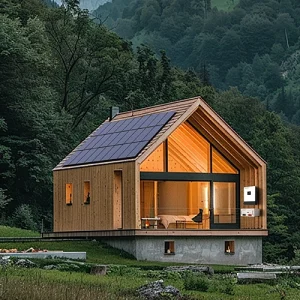
Auswirkungen eines unterdimensionierten Systems
Eine kleine Solaranlage kann Ihren täglichen Energiebedarf nicht decken. Es besteht ein hohes Risiko, dass Ihre Beleuchtung nachts ausfällt. Möglicherweise funktionieren Ihre Geräte während der Spitzenzeiten nicht. Da die Anlage unterdimensioniert ist, können sich die Batterien zu schnell entladen. Infolgedessen kann es zu häufigen Stromausfällen kommen.
Insgesamt verringert es den Komfort und die Zuverlässigkeit beim netzunabhängigen Leben. Deshalb ist die Dimensionierung Ihrer Solaranlage so wichtig.
Auswirkungen des überdimensionierten Systems
Andererseits erhöhen überdimensionierte Anlagen die Anschaffungskosten. Sie müssen zusätzliche Kosten für Solarmodule, Batterien und Wechselrichterkapazität einplanen. Oftmals wird überschüssige Energie nicht vollständig genutzt. Besteht kein Strombedarf, geht diese Energie verloren. Außerdem benötigen Sie mehr Installationsfläche, insbesondere auf Dächern oder Freiflächen. Daher ist die korrekte Dimensionierung einer Solaranlage entscheidend.
Systemeffizienzoptimierung
Eine korrekte Systemdimensionierung ist unerlässlich, um ein optimales Zusammenspiel aller Komponenten zu gewährleisten. Die Anzahl der Solarmodule muss auf die Wechselrichter und Batterien abgestimmt sein. Dies ist in der Regel notwendig, um die Ladeleistung zu verbessern und Energieverluste zu reduzieren. Darüber hinaus verhindert eine korrekte Dimensionierung der Solaranlage häufige Tiefentladungen der Batterien. Insgesamt trägt sie maßgeblich zur Verlängerung der Batterielebensdauer bei.
Energieunabhängigkeit und -zuverlässigkeit
Die korrekte Dimensionierung einer Solaranlage gewährleistet eine stabile Stromversorgung. Das Risiko von Stromausfällen während Spitzenzeiten wird deutlich reduziert. Zudem wird ausreichend gespeicherte Energie für Nächte oder bewölkte Tage sichergestellt. Insgesamt sorgt eine optimal dimensionierte Anlage für ein komfortables netzunabhängiges System.
Wie man die Größe des Sonnensystems berechnet
Die Berechnung der Größe eines Sonnensystems ist nicht kompliziert. Sie erfolgt üblicherweise in mehreren Schritten. Man muss lediglich jeden Schritt verstehen und ihn nacheinander befolgen.
Zunächst sollten Sie Ihren täglichen Energieverbrauch ermitteln. Prüfen Sie anschließend die Solarkapazität, den Batteriespeicher und die Dimensionierung des Wechselrichters. Dies sind die vier wichtigsten Schritte zur Berechnung der Größe Ihrer Solaranlage.
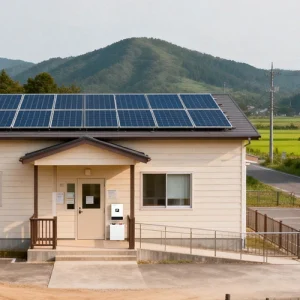
Schritt 1: Täglichen Energieverbrauch berechnen
Im ersten Schritt sollten Sie Ihren täglichen Strombedarf ermitteln. Dieser wird in Kilowattstunden (kWh) gemessen. 1 kWh entspricht einer Dauerleistung von 1000 Watt über eine Stunde. Erstellen Sie eine Liste aller wichtigen Haushaltsgeräte oder Anlagen in Ihrem System. Dazu gehören beispielsweise Kühlschränke, Klimaanlagen, Beleuchtung, Wasserpumpen und Elektronikgeräte.
Nehmen wir beispielsweise einen Kühlschrank, der täglich 5 kWh verbraucht. Eine Klimaanlage hingegen benötigt täglich 10 kWh. Hinzu kommen Beleuchtung und andere Geräte, die weitere 5 kWh verbrauchen können. Gehen wir also von einem Gesamtverbrauch von 20 kWh pro Tag aus. Dieser Wert dient als Grundlage für die Auslegung und Berechnung unserer Solaranlage in diesem Artikel.
Schritt 2: Berechnung der Solarzellengröße (kWp)
Nun haben Sie die Grundlage geschaffen: Sie benötigen täglich 20 kWh. Damit können Sie die Größe Ihrer Solaranlage berechnen. Die Berechnungsformel ist einfach.
Solaranlagengröße (kWp) =
[Täglicher kWh-Verbrauch x 1,2] ÷ [Spitzenstunden der Sonne × Systemeffizienz (0,8–0,85)]
Bei einer Last von beispielsweise 20 kWh ergibt sich die benötigte Solaranlagengröße in kWp zu 20 kWh × 1,2 ÷ (5 × 0,82) ≈ 5,85 kW. Das bedeutet, dass Sie eine Solaranlage mit einer Leistung von etwa 6 kW benötigen.
Hierbei sind die Sonnenstunden mit der höchsten Intensität ein sehr wichtiger Faktor, da sie je nach Standort variieren. In Kalifornien sind es etwa 5–6 Stunden, in Europa hingegen nur 4–5 Stunden. In Südchina beträgt die maximale Sonneneinstrahlung ebenfalls 4–5 Stunden. Passen Sie die Angaben daher immer an Ihre Region an, um die richtige Größe zu ermitteln.
Schritt 3: Batteriespeicherkapazität (kWh) berechnen
Sobald Sie die Größe Ihrer Solarmodule kennen, können Sie sich für einen Batteriespeicher entscheiden. Ein Batteriespeicher sichert die Stromversorgung nachts oder an bewölkten Tagen, wenn die Sonne nicht scheint. Zur Berechnung der Batteriegröße benötigen Sie außerdem die Gesamtlast Ihrer Anlage.
Batteriekapazität (kWh) = Täglicher Stromverbrauch (kWh) ÷ Entladezeit (DoD) ÷ Wechselrichterwirkungsgrad
Wenn Sie beispielsweise täglich 20 kWh Strom benötigen, benötigen Sie eine Batterie mit einer Kapazität von 20 kWh ÷ 0,9 ÷ 0,95 = 23,4 kWh.
In realen Anwendungen kann eine 23,84-kWh-Batterie aus 2-3 Lithium-Batterieeinheiten bestehen. Bei Blei-Säure-Batterien kann die Anzahl höher sein.
Schritt 4: Auswahl des Wechselrichters
Abschließend müssen Sie den passenden Wechselrichter auswählen, der die maximale Last bewältigen kann. Als Faustregel gilt: Multiplizieren Sie die Gesamtlast mit 1,2. Die 0,2 dienen hier als Sicherheitsreserve. Er ist für die Bewältigung von Leistungsspitzen durch Geräte wie Klimaanlagen oder Pumpen geeignet.
Wechselrichterleistung ≥ Maximale Last × 1,2
Moderne LuxpowerTek-Hybridwechselrichter unterstützen typischerweise die Integration von Solarstrom, Batteriespeicher und Stromnetz. Sie ermöglichen ein nahtloses Umschalten zwischen verschiedenen Stromquellen und unterstützen zudem Erweiterungen sowie intelligentes, zeitvariables Laden. Dadurch erhalten Sie eine effizientere und flexiblere Lösung für netzunabhängiges Wohnen.
LuxpowerTek Produktvergleichstabelle
Auf Grundlage der obigen Berechnungen haben wir eine Übersichtstabelle erstellt. Sie enthält gängige LuxpowerTek-Optionen, die Sie je nach Last auswählen können. Wir bieten flexible Lösungen für Wohngebäude jeder Größe. Ein Kernbereich unserer Arbeit sind netzunabhängige Wohnsysteme.
| Größe des Sonnensystems | Täglicher Energieverbrauch | Empfohlener LXP-Wechselrichter | Wichtigste Spezifikationen | Beste Anwendungen |
| 3-5 kW (kleine Häuser/Wohnmobile) | 10-20 kWh/Tag | GETA-LB-EU 3,6 kW (netzunabhängig/Hybrid | 3600 W Dauerleistung, GEN Boost-Überspannungsschutz, 96%-Effizienz, kompatibel mit 12-V-/24-V-/48-V-Lithiumbatterien, breiter MPPT-Spannungsbereich | Abgelegene Häuser, Wohnmobil-Campingplätze, ländliche Läden, Notstromversorgung |
| 5–8 kW (Standard-Notstromversorgung für Privathaushalte) | 20–35 kWh/Tag | GEN2-LB-EU 3–6K (Hybrid-Wechselrichter) | 3–6 kW Ausgangsleistung, max. PV-Eingangsleistung 9,6 kW, Dual-MPPT, unterstützt bis zu 10 Einheiten parallel, intelligentes zeitabhängiges und wetterbasiertes Laden, VPP-fähig | Solaranlage für das gesamte Haus mit Speicher, Spitzenlastabdeckung, USV für Kleinunternehmen |
| 6–12 kW (Große Wohnhäuser / Kleine Gewerbebetriebe) | 30–50 kWh/Tag | SNA PRO-EU 3–6,5K (Eco Hybrid) | 6,5 kW Dauerleistung, max. PV-Eingangsleistung 12 kW, unterstützt bis zu 16 Einheiten parallel, AC-Kopplungs-Upgrade, GEN Boost-Spitzenschutz, intelligenter Stromwandler mit Null-Einspeisung | Villen, Bauernhöfe, Kliniken, Umrüstung bestehender netzgekoppelter Systeme auf Energiespeichersysteme |
Aktuelle Anwendungsbeispiele für LuxpowerTek Solarwechselrichter
Die Beispiele aus der Praxis geben Ihnen mehr Sicherheit. Sie helfen Ihnen auch zu verstehen, wie die Systemdimensionierung in der Praxis funktioniert. In den USA installierte ein Haushalt mit einem täglichen Verbrauch von 25 kWh ein LuxpowerTek-System. GEN2-LB-EU 6 kW Wechselrichter mit dem Batteriesystem. Das Ergebnis war eine stabile Stromversorgung und eine jährliche Stromkostenersparnis von etwa 701 TP3T.
Ein weiteres wichtiges Anwendungsbeispiel lässt sich in Südostasien beobachten. Die Nachbarschaft installierte eine netzunabhängige Hütte, die mit folgender Ausstattung versehen ist: GETA-LB-EU 3,6K Wechselrichter und einer Li-7,5e-Batterie. Das System bietet zuverlässige Stromversorgung rund um die Uhr ohne Netzanschluss.
Diese Beispiele aus der Praxis zeigen Ihnen, wie wichtig die richtige Dimensionierung und die passende Produktauswahl sind und wie die perfekte Dimensionierung sowohl Einsparungen als auch Energieunabhängigkeit ermöglicht.
Zusammenfassung
Bisher haben Sie gelernt, wie Sie die richtige Größe Ihrer Solaranlage für Ihr Projekt berechnen. Mithilfe der oben genannten Formeln und Schritte haben Sie nun eine klare Antwort auf die Frage, welche Größe Ihre Solaranlage haben muss. Die Berechnung ist gar nicht so kompliziert. Sie müssen lediglich die Gesamtlast des Systems addieren. Anschließend können Sie anhand dieser Gesamtlast die Größe der Solarmodule, die Batteriekapazität und die Nennleistung des Wechselrichters bestimmen.
LuxpowerTek ist ein führender Hersteller hochwertiger Wechselrichter und Batterielösungen. Mit unseren Energiespeichersystemen (ESS) realisieren Sie eine stabile netzunabhängige Stromversorgung. Bei Fragen oder Interesse an den Lösungen von LuxpowerTek kontaktieren Sie uns bitte.