

Solar energy has seen massive adoption over the past few decades, thanks to its advanced, clean, and easy availability. But solar energy is not a single-step procurement. Instead, it involves several steps and options to convert sunlight into a usable form of energy.
Different types of inverters transform solar energy into other formats. They vary between the commercial and residential sectors depending on their use. Today, we will discuss various types of residential solar inverters and understand how they work.
What are Residential Solar Inverters?
Sunlight falls on the solar panels, and photovoltaic cells produce the energy. But this energy is in DC (direct current) format, which is technically not usable for home appliances.
Most home devices use the AC. The conversion of DC to AC is a necessity of time. Solar Inverters are devices that convert DC to AC and back to DC.
In short, solar inverter systems transform the energy shapes. Residential Solar Inverters are used in homes and other residential settings to convert solar energy into usable electricity.
Type of Residential Solar Inverters
Residential Solar Inverters come in various types based on their working mechanisms and energy conversion. We have the modern types used in basic to advanced homes.
- String Inverters
- マイクロインバータ
- ハイブリッド・インバータ
- オフグリッド・インバータ
- グリッド・タイ・インバータ
- All-in-One ESS Inverters
Let’s discuss each type of solar inverter with its pros and cons.
String Inverters
Think of a string system that connects and controls all the systems. If you have multiple solar panels installed, as is done in many homes, they can be connected to a central solar inverter called a string inverter.
Each string can have more than five solar panels and is connected to the inverters. If one string fails, the entire string system can shut down.
However, there are pros and cons of such systems.
長所
- It is an affordable choice with the connected system.
- Installation is simple and more efficient with less time consumption.
- Such installation systems have a lifespan of 12-15 years, which is pretty long.
短所
- Flexibility is pretty limited because of interconnections.
- If one panel fails in a string, the whole string fails, causing disturbance for users.
マイクロインバータ
Have you ever wondered about the minute inverter? It is here— microinverter. Each solar panel has a small inverter installed to convert DC to AC. When the whole current is supplied, it is the combination of many microinverters on different solar panels.
長所
- Each solar panel has a different inverter system. Therefore, if one fails, others remain unaffected.
- It is highly safe because of a separate system and low DC voltage.
- You have next-level scalability because of separate systems. Simply add panels with their microinverters to the existing system. That’s all!
短所
- It is a pretty expensive system because of separate inverters for each panel.
- Maintenance is a challenge because inverters lie under the solar panels.
ハイブリッド・インバータ
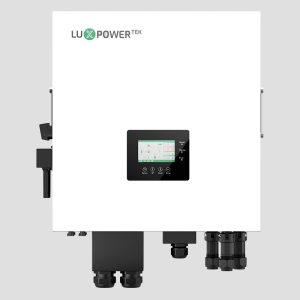
Hybrid inverters are the hot topics. There is no need to buy DC-to-AC or AC-to-DC inverter systems separately, as this would make your system more complex. Instead, you can save extra costs while simplifying your solar setup.
Do you want to know how? Hybrid solar inverters are the magicians here. They deliver an extended performance and combine AC-to-DC and DC-to-AC conversion facilities at one stop. Such inverters help store, save, and utilize energy whether sunlight is available or not. They are part of energy-independent systems.
長所
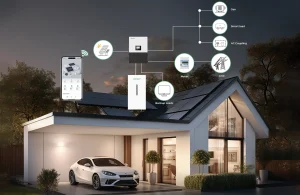
- You don’t need to buy two inverters; a hybrid can handle dual tasks effortlessly.
- Built-in battery management ensures energy independence.
- Intelligent control with grid and off-grid facilities makes it compatible with modern systems.
短所
- If you need basic functionalities at affordable prices, it can be expensive for you.
- The installation process is complicated.
オフグリッド・インバータ
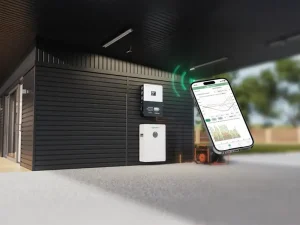
Do you want true energy independence? If you live in remote areas where electrical supply is unavailable or insufficient to meet your needs, you can opt for off-grid inverters.
These オフグリッドインバーター are part of a system that has
- ソーラーパネル
- バッテリー
- ソーラー・インバータ
Three fundamental components convert sunlight into energy and use it. The excessive energy is stored in batteries with timely conversion by inverters. Ultimately, batteries work as a backup supply at night or on a cloudy day when sunlight is not available.
Such a system doesn’t require additional setup for the energy or grid system to supply electricity.
長所
- It provides energy independence and doesn’t require us to rely on grid systems.
- Backup supply keeps the energy on 24/7.
- Remote locations can enjoy the energy supply without waiting for reliable sources.
短所
- Batteries are expensive, increasing the overall costs of such inverter systems.
- Compatibility and complexities are the prominent issues in such cases.
グリッド・タイ・インバータ
Among the off-grid and hybrid inverter systems, there is another configuration— Grid-Tied Inverters. They have dual energy supply systems.
- If energy production exceeds the limit, these inverters supply the energy to the grid. They get an advantage from the time of use from the government authorities.
- If energy production is less, the grid system can provide energy back to the house.
Energy flow occurs from the grid to the home and from the home to the grid through the grid-tied inverters.
長所
- This system is pretty affordable as you don’t have to set up any extra system, such as batteries.
- You harness the government benefits with time-of-use policies.
- Whether it is night or day, you have the energy supply available.
短所
- You don’t achieve energy independence with the off-grid system.
- The installation setup is a little complex due to the grid systems.
All-in-One ESS Inverters
Nowadays, you can get one of the most efficient energy systems: the all-in-one ESS system. Inverters used in this system help convert energy and generate clean energy at affordable prices.
In a single compact box, you get:
- ストリング・インバータ
- MPPT charge controller
- Battery management system
- Battery bank
- Monitoring gateway
- Backup power module
This system is beneficial and offers users additional options.
長所
- Efficiency is pretty high due to MPPT charge controllers and battery management systems.
- Installation is clean and straightforward, with very little time consumption.
- The integrated system operates smoothly with all the components.
短所
- It is not ideal for system expansion or for custom installations.
- Upfront cost is high compared to other systems.
Essential Factors to Consider When Choosing a Residential Solar Inverter
Residential Solar Inverters are pretty helpful for home systems, but there are different types. You have to consider the following factors.
Capacity and Size
Compatibility of the solar inverter sizes with the number of solar panels and production is necessary. If you purchase a low-capacity solar inverter, the output will be lower than the total energy produced by the solar panels. Similarly, a high-capacity solar inverter will have more power generation than required. It will be nothing but a cost burden on your budget.
A standard practice is to choose a solar inverter that has a slightly lower rating than the solar panels. It helps optimize energy production while reducing the overall energy costs.
MPPT
MPPT, or maximum power point tracking, is an excellent factor that brings more efficiency and produces more power.
MPPT traces the sunlight intensity and alters the voltage and other factors to generate maximum energy. Solar panels change the direction to get maximum sunlight exposure and intensity.
Get solar inverters with the MPPT charge controllers. They can produce and store maximum power output. It will increase your energy storage and cut your energy costs.
Efficiency Ratings
Efficiency ratings show the maximum energy transformed from DC to AC. Even small fluctuations in efficiency matter a lot.
Solar panels have a high efficiency of more than 95%. The solar inverter conversion efficiency can increase or decrease the output.
You should get the highest efficiency ratings to produce the maximum energy. Check the heat management as well.
保証
Solar Inverters are already famous for their extended lifespans. They can add:
- String inverters work tirelessly for 10–12 years and start degrading after that time.
- Microinverters are one of the longest-surviving inverter systems. Consider a lifespan of 20–25 years.
- Hybrid inverters have at least 10 years of lifespan. Higher quality ones can extend more than that.
- ESS systems also have a 10-year lifespan.
スマート・モニタリング
The inverter must have advanced monitoring systems. There should be real-time tracking of the inverters and app-based control systems. Even when sitting miles away, you can control and configure the settings. Also, you can set up the threshold for automatic functionality.
結論
Using the inverter is necessary. However, it depends on your preference if you want to stay energy independent. String, off-grid, and hybrid solar inverters are just examples of modern solar inverters.
Do you want to find a high-quality solar inverter supplier? LuxpowerTek offers a wide range of solar inverter solutions. Our ハイブリッドソーラーインバータ is a hot-selling product with affordable prices and quality energy production. Optimize your solar energy production with our experts right away!
 GEN-LB-EU 3-6K